Can You Microwave an Aluminum Tray Safely at Home?
In this article
-
- Is it ever completely safe to microwave aluminum foil trays?
- What actually causes the sparking when metal goes in a microwave?
- Can you microwave an aluminum tray if it’s flat and doesn’t touch the walls?
- Does the wattage of my microwave change the risk with metal?
- What’s a safer alternative to foil trays for reheating?
- Can a commercial microwave like the Sharp R-21LCFS handle metal trays better than a home microwave?
- Why do some frozen dinners come in foil trays that say “microwave safe”?
- Is a manual defrost system, like the one on the Sharp R-21LCFS, harder to use than automatic defrost?
- How long is the warranty on the Sharp R-21LCFS commercial microwave?
- What size kitchen setup is the Sharp R-21LCFS best suited for?
You just pulled a foil tray of leftovers out of the fridge, and you’re standing at the microwave wondering if you’re about to start a kitchen fire show.
Fair question. It’s the kind of thing nobody explains clearly until you’re mid-panic with your finger hovering over the “start” button.
So let’s settle it once and for all: can you microwave an aluminum tray, and if so, under what conditions does it actually work without turning your microwave into a lightning display?
The Quick Answer
Technically, yes, some aluminum trays can go in some microwaves under very specific conditions.
Realistically, most kitchen and appliance experts recommend against it, because the risk of sparking, arcing, or damaging your microwave is high enough that it’s just not worth the gamble.
Thin foil trays, trays with sharp edges, or trays that touch the microwave’s interior walls are especially prone to arcing.
If you’re asking “can you microwave an aluminum tray” because you’re staring down a frozen dinner in foil packaging, the safest move is almost always to transfer the food to a microwave-safe container first.
Why Aluminum and Microwaves Don’t Naturally Get Along
Microwaves cook food by bouncing electromagnetic waves around the cooking chamber until they excite water molecules in your food.
Metal reflects those waves instead of absorbing them.
That reflection is exactly why a fork, a twist tie, or a crumpled piece of foil can spark — the waves bounce off the metal and concentrate at sharp edges or points, creating tiny electrical arcs.
Flat, smooth aluminum trays are less likely to arc than crumpled foil, but “less likely” isn’t the same as “safe every time.”
Thickness matters too — flimsy disposable trays flex and warp under heat, which can create the exact kind of uneven surface that invites sparking.
What To Check Before You Even Think About It
Before you microwave anything aluminum, run through this quick mental checklist.
-
Check for a “microwave-safe” label on the packaging.Some manufacturers design specific foil trays meant for microwave use — look for explicit instructions on the box, not just an assumption.
-
Look at the shape of the tray.Smooth, shallow, and rounded trays are safer than anything with folds, ridges, or crimped edges.
-
Make sure the tray isn’t touching the microwave walls or turntable ridges.Even a smooth tray can arc if it’s pressed right up against metal or a hot spot.
-
Never use a lid made of foil in combination with the tray.Covering food with foil doubles your metal surface area and dramatically increases arcing risk.
-
Keep the power level low if you do attempt it. High-powered, full-blast cooking on metal is far riskier than a lower, gentler setting.
-
Watch it the entire time. If you see any sparking, flickering, or popping sounds, stop the microwave immediately and remove the tray.
-
When in doubt, transfer the food. A five-second pour into a glass or ceramic dish is always the safer bet over guessing with foil.
That last point is really the whole game.
Most kitchen mishaps involving aluminum happen because someone assumed a tray was fine without checking.
The Safer Alternative: Investing in a Microwave You Trust
If you’re the kind of person who reheats a lot of food — whether at home, in a break room, or in a small food-service setup — the real fix isn’t fighting with foil trays.
It’s having a reliable microwave that heats fast, evenly, and predictably enough that you’re not tempted to cut corners with sketchy containers in the first place.
That’s where something like the Sharp R-21LCFS commercial microwave earns its keep.
Why the Sharp R-21LCFS Is Worth a Look
According to the spec sheet, this is a medium-duty commercial unit built by Sharp, a brand with a long track record in the foodservice industry.
It runs at 1000 watts, which puts it solidly in the “actually reheats food properly” category rather than the weak dorm-room tier.
The listing shows a simple electronic dial controller, which means less fumbling with digital menus and more just turning a knob to the time you want.
That kind of interface matters more than people expect — in a busy kitchen or break room, nobody wants to decode a control panel.
It also includes a timer function with an auto-cancel feature, so you’re not stuck babysitting it once you’ve set your time.
Countertop-ready by design.
The R-21LCFS is built as a countertop installation, according to the product details, so it slots into a kitchen counter, break room station, or concession stand without needing special mounting.
Its dimensions come in at 16 inches deep, 20.5 inches wide, and just over 12 inches tall, giving you a footprint that’s substantial but not overwhelming for a commercial-grade unit.
At 37 pounds, it has enough heft to feel sturdy and stay put, without requiring a forklift to move it into place.
Turntable and capacity.
Inside, you get a 13.5-inch turntable diameter, which is generously sized for rotating full plates or trays evenly.
The interior capacity is listed at 1 cubic foot, giving you enough room for standard plates, bowls, and take-out containers without a tight squeeze.
Built stainless, built to last.
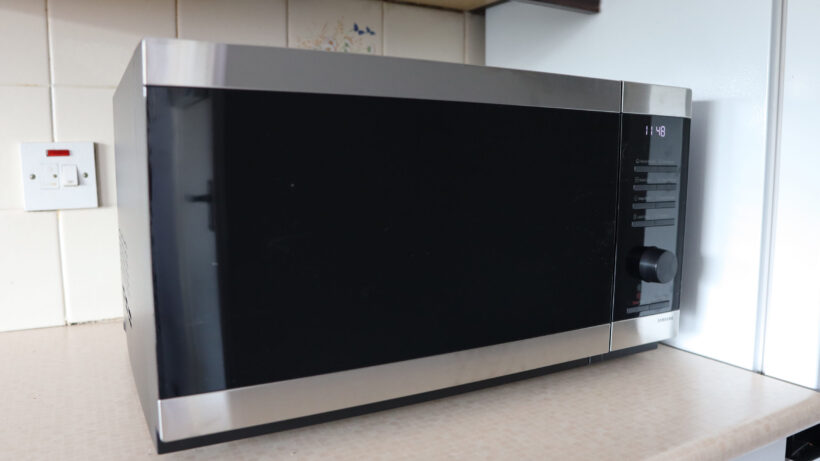
The exterior and interior materials are stainless steel, according to the product details, which is the standard for commercial kitchen equipment because it resists corrosion and cleans up fast.
Stainless steel interiors also tend to hold up better under constant daily use than the painted metal interiors found in many household microwaves.
Power and defrosting.
It runs on standard 120-volt power and a 50-hertz frequency, and it uses a manual defrost system rather than an automated sensor-based one.
That manual defrost setup means you’re in control of timing, which some cooks actually prefer over letting a microwave “guess” how long defrosting should take.
Warranty backing.
According to the manufacturer’s warranty description, this Sharp commercial microwave is backed by a three-year limited warranty on the magnetron tube, plus a one-year warranty on parts and labor with service at the end-user’s place of business.
That’s a meaningfully longer commitment than what you typically see bundled with budget household microwaves.
Reputation and ranking.
The listing shows this model holds the number one spot in the Commercial Microwaves category and carries a 4.6 out of 5 star rating from 636 customer reviews, which suggests buyers who’ve used it are largely satisfied.
Pros
✅ Strong 1000-watt output for fast, even reheating
✅ Simple electronic dial control with auto-cancel timer
✅ Durable stainless steel construction inside and out
✅ Generously sized 13.5-inch turntable and 1 cubic foot capacity
✅ Backed by a three-year magnetron warranty plus one-year parts and labor
Cons
⛔ Manual defrost only, no automated sensor-based defrosting
⛔ Countertop-only design, so it needs dedicated counter space rather than built-in mounting
Who Should Actually Buy This Microwave
If you run a small café, food truck prep station, office break room, or church kitchen, this unit fits the “workhorse” role nicely.
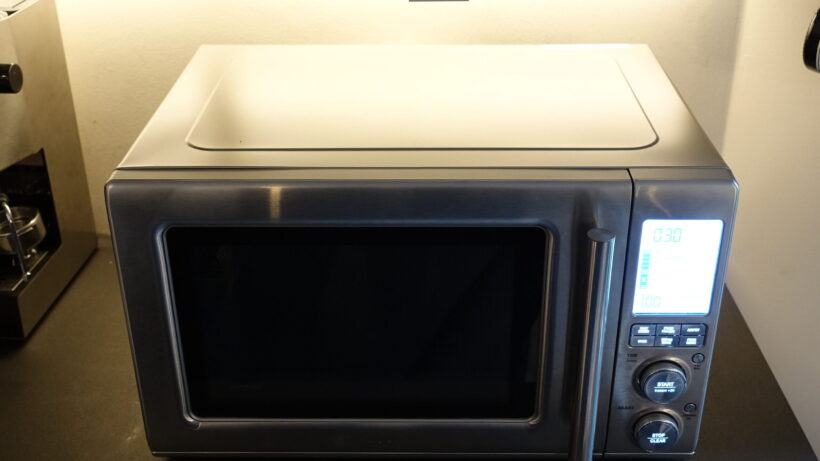
Anyone who reheats food constantly throughout the day will appreciate the higher wattage and the straightforward dial interface that doesn’t require a manual to operate.
People who’ve been burned by flimsy household microwaves that take forever to heat anything will likely notice the difference immediately.
It also suits anyone who wants a microwave that won’t quit after a year of daily commercial-level use, given the stainless build and longer warranty coverage.
Who Should Probably Skip It
If you’re microwaving for one person in a small apartment kitchen, this is probably more microwave than you need.
The 37-pound weight and countertop-only design mean it’s not the easiest fit for a tiny kitchen with limited counter space.
Anyone who specifically wants automatic sensor-based defrosting or reheating presets should also look elsewhere, since this model keeps things manual and dial-based.
Frequently Asked Questions
Is it ever completely safe to microwave aluminum foil trays?
Not with total certainty — even smooth, manufacturer-approved trays carry some risk, so cautious cooks generally treat foil as a “use only if explicitly labeled microwave-safe” material.
What actually causes the sparking when metal goes in a microwave?
Sparking happens when microwaves bounce off metal edges or points and create a concentrated electrical charge, which is more likely with crumpled, thin, or sharp-edged aluminum.
Can you microwave an aluminum tray if it’s flat and doesn’t touch the walls?
Flat aluminum trays that don’t touch the microwave’s interior walls are less prone to arcing, but manufacturers and appliance experts still generally recommend transferring food to glass or ceramic when possible.
Does the wattage of my microwave change the risk with metal?
Higher wattage units, like a 1000-watt commercial microwave, generate more energy, which can increase the intensity of any arcing that does occur, so lower power settings are safer if you’re experimenting.
What’s a safer alternative to foil trays for reheating?
Glass, ceramic, or labeled microwave-safe plastic containers are the standard safer swap, since none of those materials reflect microwaves the way metal does.
Can a commercial microwave like the Sharp R-21LCFS handle metal trays better than a home microwave?
No — the same physics apply regardless of wattage or build quality, so metal risks remain the same across both commercial and household units.
Why do some frozen dinners come in foil trays that say “microwave safe”?
Certain manufacturers engineer specific tray shapes and thicknesses that reduce arcing risk under controlled conditions, but that safety only applies to that specific labeled product, not foil trays in general.
Is a manual defrost system, like the one on the Sharp R-21LCFS, harder to use than automatic defrost?
It just requires you to estimate and set your own time rather than letting a sensor decide, which some users prefer for more predictable results.
How long is the warranty on the Sharp R-21LCFS commercial microwave?
According to the manufacturer, it comes with a three-year limited warranty on the magnetron tube and a one-year warranty on parts and labor.
What size kitchen setup is the Sharp R-21LCFS best suited for?
Given its 1 cubic foot capacity and countertop design, it fits well in small commercial kitchens, break rooms, cafés, or similar moderate-volume settings.
The Bottom Line
So, can you microwave an aluminum tray in 2025? Sometimes, cautiously, and only under the right conditions — but for most everyday reheating, it’s simpler and safer to just move your food to a proper container.
What matters more long-term is having a microwave you can actually trust to heat food evenly and quickly, without needing to gamble with sketchy containers in the first place.
Based on the specs, the Sharp R-21LCFS commercial microwave looks like a solid pick for anyone who needs reliable, higher-wattage performance backed by a genuinely strong warranty.
If your current microwave has you tempted to cut corners with foil trays just to save time, it might be time to upgrade to something built for the job.